
 MNO Region 5: |
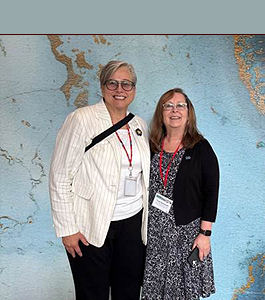
MNO President Margaret Froh highlights distinctions-based partnerships, Métis health data and workforce development at alPHa conference
Ontario public health leaders, medical officers of health, researchers, board members and healthcare professionals gathered in Toronto for the Association of Local Public Health Agencies (alPHa) 2026 Annual General Meeting and Conference, where MNO President Margaret Froh delivered a keynote on Métis health priorities and the importance of strong partnerships with Métis communities.
President Froh challenged attendees to recognize the distinct realities, priorities and strengths of Métis communities across Ontario, highlighting both the longstanding foundations of Métis wellness and the growing role of Métis leadership in shaping health systems.
Métis communities have long practised their own approaches to wellness and caregiving. As President Froh noted, “Public health has always been about relationships, trust, and connection.”
The keynote introduced delegates to the MNO and its more than 32,000 registered Métis citizens. President Froh emphasized that Métis people live in urban, rural, northern, and remote communities across Ontario, making Métis citizens part of every public health unit catchment area in the province.
A central theme of the presentation was the importance of distinctions-based approaches to health and public health. President Froh highlighted that First Nations, Inuit and Métis peoples have distinct histories, governance structures, cultures, and priorities. Recognizing these distinctions is essential to developing programs and services that reflect the needs of the communities they serve.
The MNO’s long-standing partnership with the Institute for Clinical Evaluative Sciences (ICES) provided a strong example of this approach. Since 2008, the partnership has generated Métis-specific health data, helping researchers, policymakers, and program planners better understand the health experiences of Métis citizens in Ontario.
Research through the partnership has identified higher rates of conditions including diabetes, cardiovascular disease, asthma, and chronic obstructive pulmonary disease among Métis citizens. Research conducted during and following the COVID-19 pandemic also identified increased mental health and addictions-related visits among Métis citizens, particularly women and older adults.
President Froh emphasized that Métis-specific data helps move health systems beyond assumptions and supports programs and policies that reflect the lived realities of Métis citizens. It also creates opportunities for Métis communities to help guide how their data is interpreted and used.
The keynote also highlighted the importance of developing a strong Métis health workforce. Through bursaries, educational supports, placements, and partnerships, the MNO is supporting Métis learners pursuing careers in medicine, nursing, epidemiology, mental wellness, public health and health policy. Over the past five years, nearly one-third of students supported through MNO Employment and Training programs have entered health-related fields.
Across Ontario, the MNO is also working with hospitals, public health units, community health organizations, and healthcare providers on initiatives ranging from prenatal education and diabetes prevention to food security, harm reduction, and mental wellness.
“As a member of the Métis Nation of Ontario, Northwestern Board of Health and former Chair of alPHa, I was incredibly proud to see President Froh address Ontario’s public health leaders,” said Trudy Sachowski, Vice Chair of the Northwestern Board of Health and Past Chair of alPHa. “Her message demonstrated the value of distinctions-based partnerships and highlighted the important contributions Métis citizens continue to make in advancing health and wellness across our province.”
President Froh concluded by encouraging public health organizations to build programs with Métis communities, not for them. Meaningful partnerships, she emphasized, are essential to improving health and wellness outcomes for Métis citizens across Ontario.